Did You Hear That?
Book one of the Boring Science Stuff seriesSomebody drops a plate behind you and you jump.
You didn't decide to. Nobody could decide not to. The signal reaches your muscles in three connections, and your eyes are shut before your brain has worked out what the noise was.
Everything in this book runs on that shortcut.
The whistle that was said to liquefy a man's organs, and the note it actually played — one you could hum. The bridge everyone was taught was destroyed by resonance, which wasn't. The dinosaur that never roared. The frequency that supposedly proves a wartime conspiracy, chosen because the other number was prime. The ghost explained by science, and then the science that nobody checked either.
Some of these stories turn out to be true. More of them began as careful measurements by honest people, and then a number came loose from the sentence that gave it meaning.
Every myth is scored out of ten. Ten is near the truth. One is flying pigs.
Didn't See That Coming
Book Two of the Boring Science Stuff seriesThere is a hole in your vision the size of eleven full moons. It is there right now, in both eyes, and you have never once seen it.
Your eyes jump three times a second and delete what happens in between. Your retina is wired in backwards. The colour magenta does not exist anywhere in the spectrum, and your brain invents it to close a gap that light leaves open.
This is a book about what you can see, what you cannot, and how often the story we tell about it turns out to be wrong.
A gift-shop toy that has been mislabelled since the 1870s and demonstrates the opposite of what the box claims. A Danish astronomer who proved light has a speed and refused to say what it was — and three centuries of textbooks quoting him a number he never gave. Neutrinos that beat light to Italy because somebody had not pushed a cable all the way in. A snake that does not see infrared but feels it, on a stretched membrane, with a receptor descended from the one that makes horseradish unpleasant.
Forty-one chapters, each one scored out of ten for how much of it survives contact with the evidence. Ten is near the truth. One is flying pigs.
What keeps turning up is not lies. It is careful measurements that lost the sentence around them — a figure quoted without its assumption, a caveat that fell off in transmission, a footnote expanded the wrong way by somebody working in a second language. Nobody invented anything. Things were simply passed on, slightly smoothed, until the smoothing became the story.
Which is exactly what your visual system does to the hole in your eye.
Sniff My Finger
Book Three of the Boring Science Stuff seriesYou have five senses.Except you probably don't.And the things you think you know about them are very likely wrong.Why does a chilli feel hot when it isn't? Why does wasabi seem to burn your nose? Why can't you smell your own house? Why does every part of your tongue taste everything when generations of schoolchildren were taught otherwise? Why can a bacterium remember what happened four seconds ago? And why does food taste different when you hold your nose?Sniff My Finger takes on the everyday claims we've inherited about taste, touch and smell and puts them where they belong: under examination.Some are almost completely wrong. Some contain a small piece of truth that has been stretched beyond recognition. And some turn out to be astonishingly accurate for reasons nobody expected.Along the way, you'll encounter bacteria navigating without brains, receptors that lie about heat and cold, smells measured in impossible units, phantom sensations, disappearing senses, expert wine tasters, the chemistry of coriander, the strange machinery of touch, and the uncomfortable fact that much of what we call flavour isn't happening on the tongue at all.This isn't a book about making science complicated.It's about discovering how complicated the simple things were all along.And, as with the rest of the series, every claim is scored, every argument is explained, and the evidence is there for you to check.Because a myth isn't necessarily something nobody tested.Sometimes it's what happened after somebody tested it.
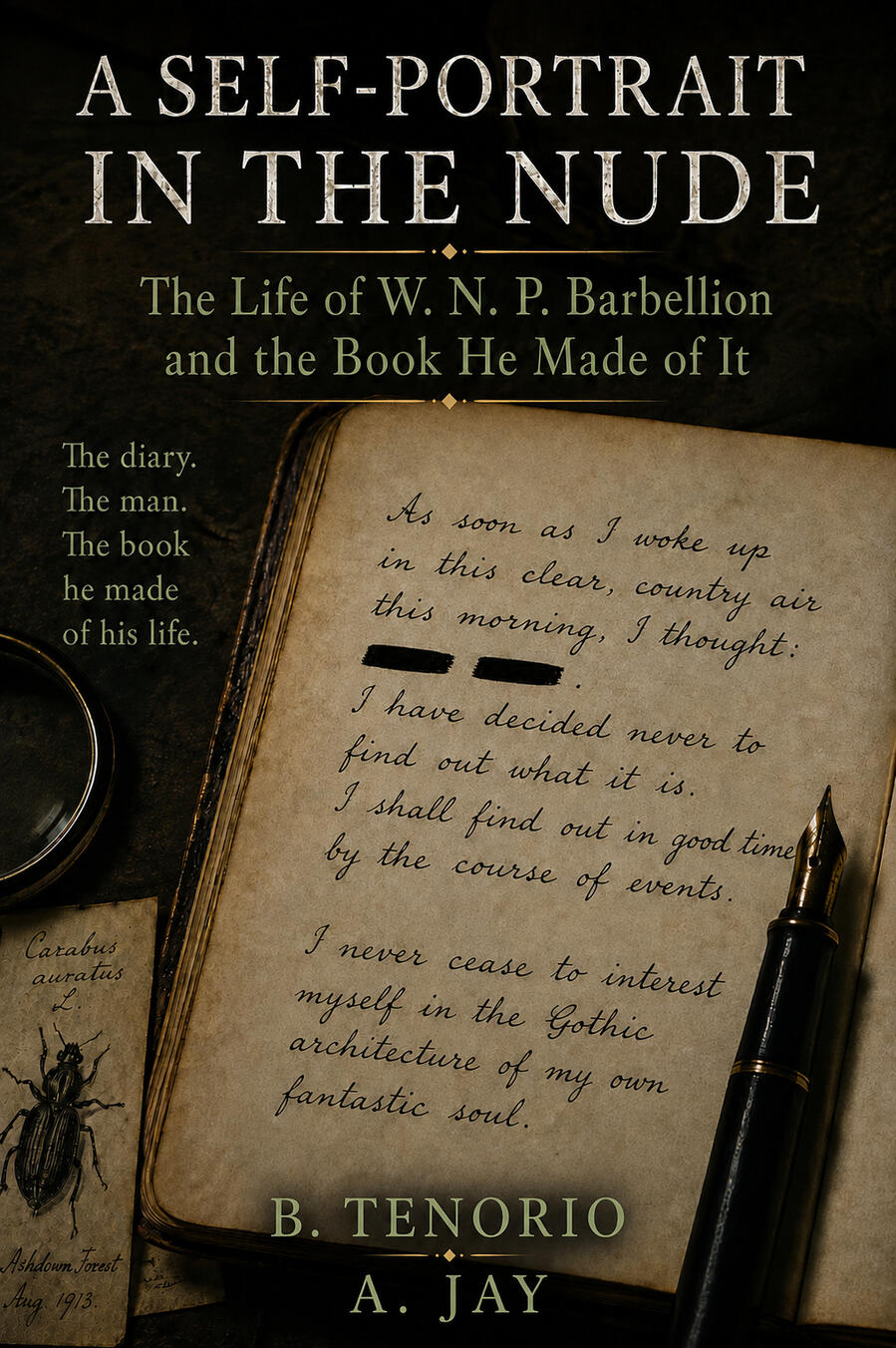
A SELF PORTRAIT IN THE NUDEIn March 1919 a book appeared announcing the death of its author.
He was still alive, and he had arranged it that way.
The Journal of a Disappointed Man made W. N. P. Barbellion briefly famous and has been read for a century as the rawest thing in English literature: the unedited notebooks of a young naturalist watching his own body fail.
H. G. Wells introduced it. Arnold Bennett called it the book of the day.One critic said it must be a hoax.It is not a raw document. In 1917, dying and barely able to hold a pen, Bruce Frederick Cummings went back through fourteen years of his own diaries and made a book out of them — cutting, rewriting, blanking out the name of his disease, planting footnotes that give away the ending, and inventing the name the world would know him by.He left the evidence in plain sight, in twenty-seven footnotes nobody has ever collected.
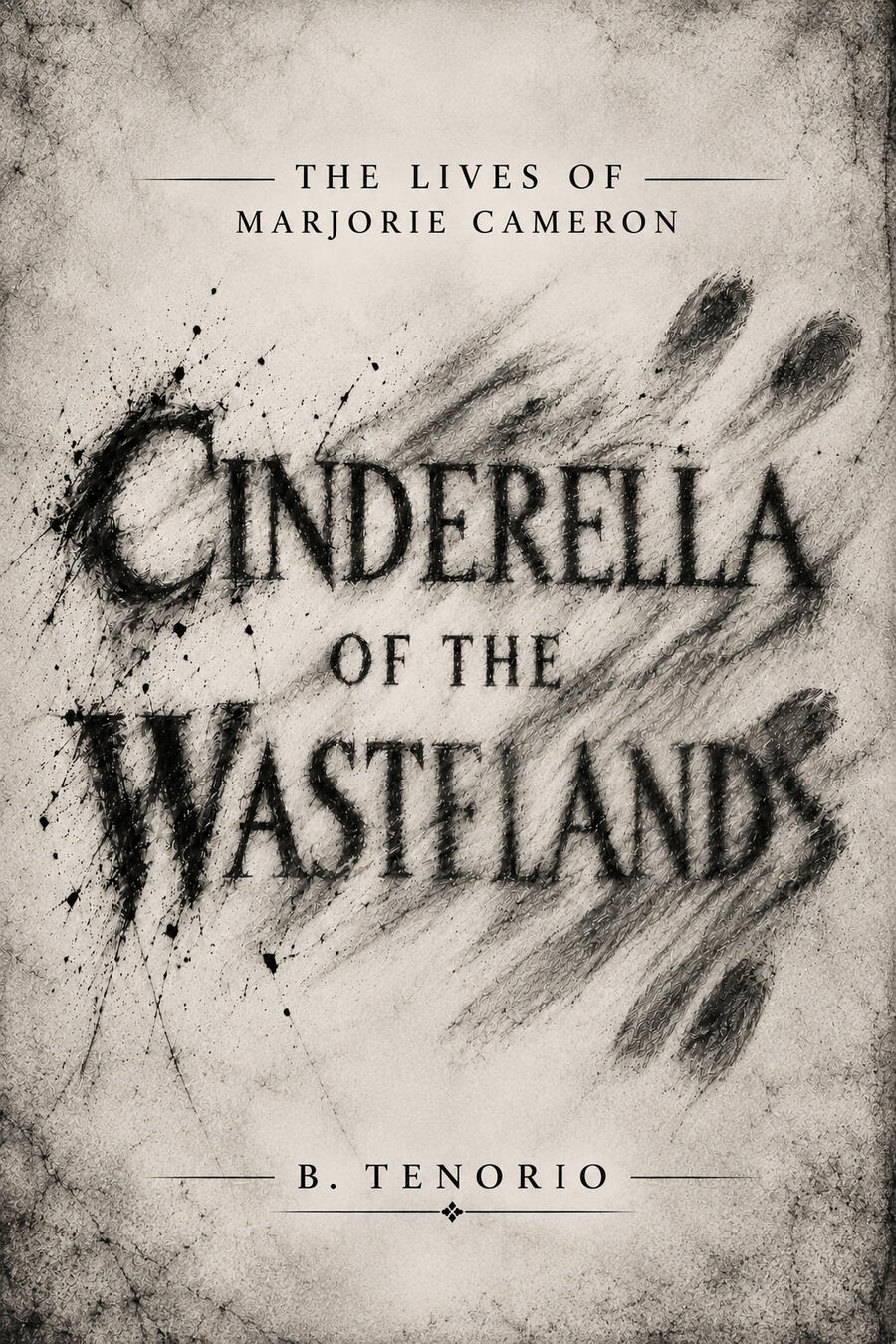
Cinderella of the Wastelands: The Lives of Marjorie CameronMarjorie Cameron has become one of the great mysteries of twentieth-century American occult and countercultural history: the red-haired “Scarlet Woman,” the witch, the muse, the artist, the woman supposedly summoned into the life of rocket engineer Jack Parsons.But what happens when the mythology is put aside and the record is allowed to speak?Cinderella of the Wastelands follows Cameron from her childhood in Belle Plaine, Iowa, where newspapers recorded a gifted young artist and cartoonist, through the Navy, where she became a cartographer drawing maps for the Joint Chiefs of Staff, and into post-war Pasadena, where her life became entangled with Parsons, occultism, art, poverty, motherhood and a mythology that would eventually overshadow the woman herself.Drawing on contemporary newspapers, military records, archives, interviews, photographs and Cameron's own words, this book follows the names imposed upon her — and the name she chose for herself.Because the woman who was repeatedly described as someone's witch, muse, goddess or Scarlet Woman was also a daughter, sailor, artist, mother, mentor, gardener, friend and stubbornly independent human being.This is not another story about the legend.It is an attempt to find the woman underneath it.
Alice Ramsey’s Four Women and a RoadBefore highways crossed America, there were roads that barely deserved the name.In June 1909, Alice Ramsey climbed behind the wheel of a green Maxwell and set out from New York with three women beside her. Their destination was San Francisco.They had maps, determination and an automobile that would repeatedly remind them how far they were from home.Across mud, mountains, desert and miles of uncertain track, the four women faced breakdowns, exhaustion, weather and the countless small difficulties of travelling across a country still being connected by road.Yet the journey became something larger than a test of endurance.It became a story of friendship, frustration, courage and freedom—and of four women refusing to believe that the road ahead was not theirs to travel.Alice Ramsey’s Four Women and a Road is the fictionalised story of an extraordinary journey that really happened.